THE FIRST WAVE
1956–1972
Things move pretty fast from there.
An idea becomes a machine. A machine learns a game. Then it starts a conversation. For a moment, the possibilities seem endless.
SCROLL TO FOLLOW THE FIRST BREAKTHROUGHS
Read the source ↗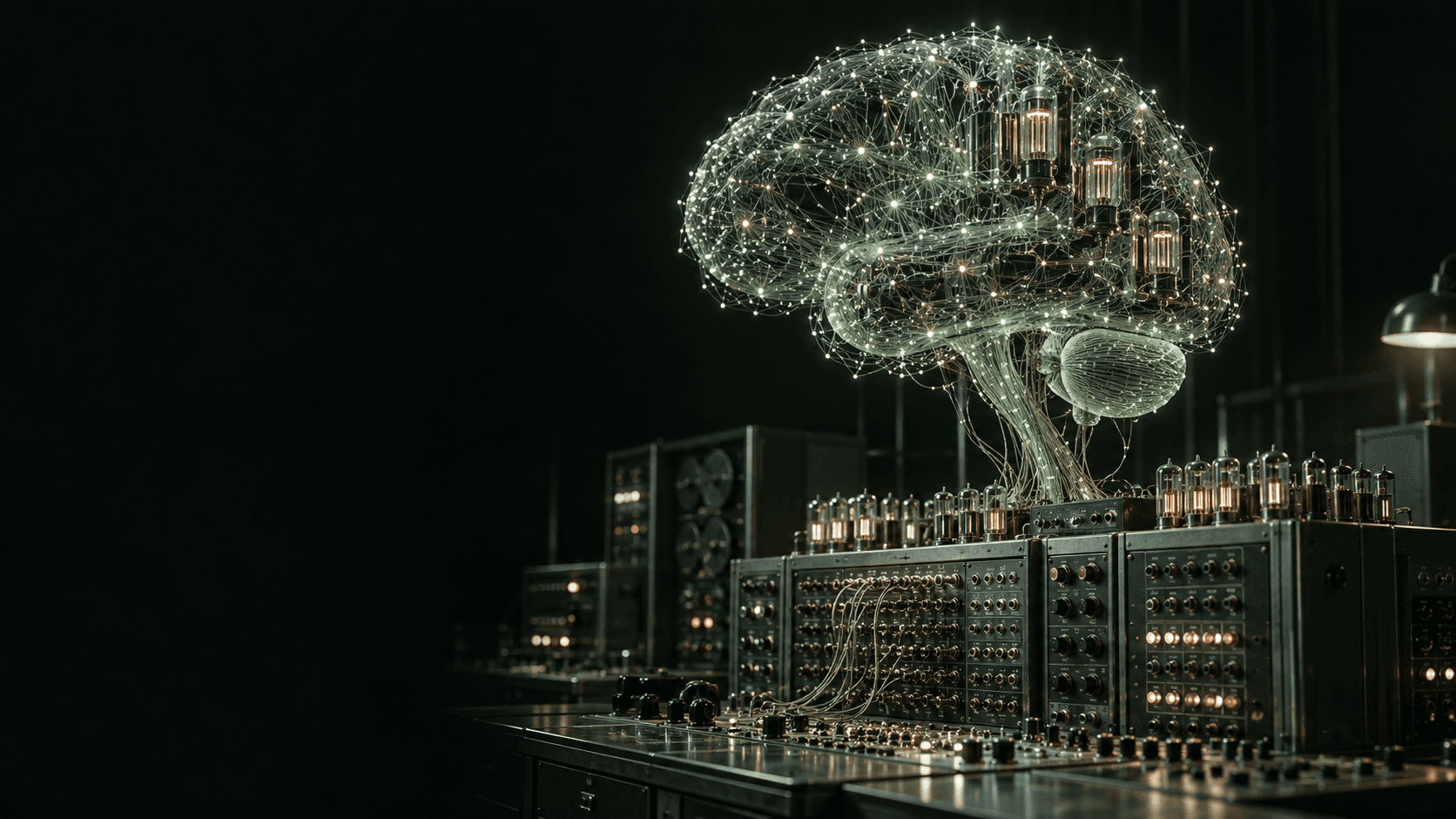
December 20th, 1956. Artificial intelligence is born. During the Dartmouth Conference, researchers propose that aspects of human intelligence could be simulated by machines. The date is a cinematic marker; the Dartmouth workshop took place in summer 1956.
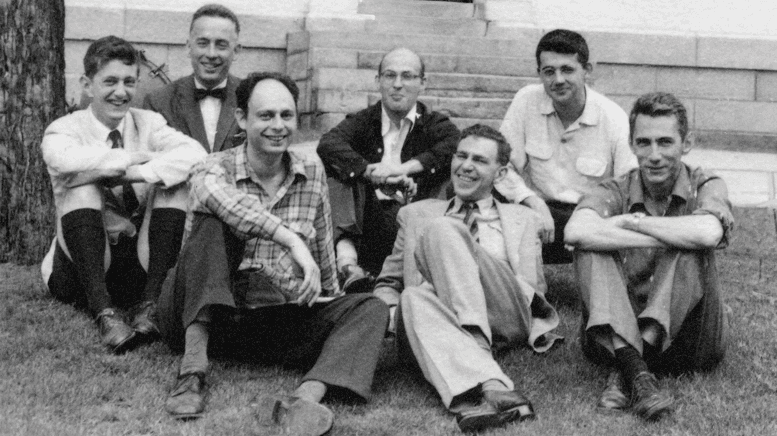
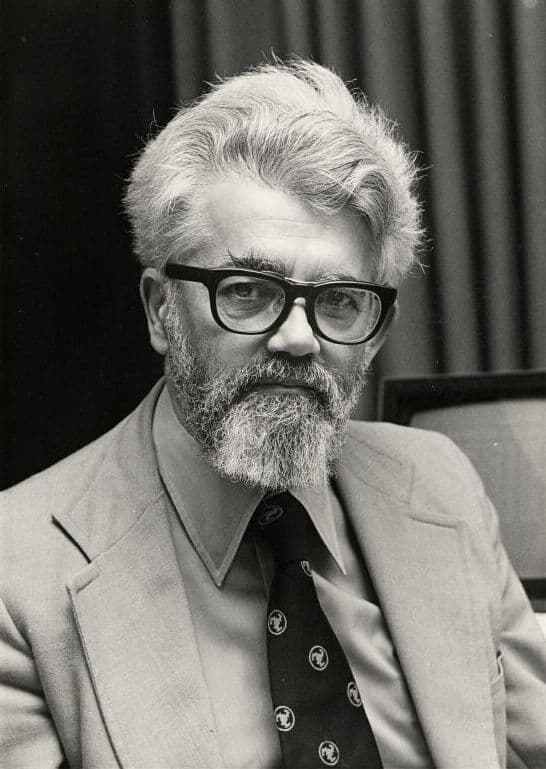
Display date is a cinematic marker. The workshop took place in summer 1956; the term appeared in its 1955 proposal.
An idea becomes a machine. A machine learns a game. Then it starts a conversation. For a moment, the possibilities seem endless.
Huge promises were made.
But the machines weren’t ready.
Research continued, but funding and confidence fell. Three main factors held the field back.
Computing power couldn’t support the scale of the problems researchers wanted to solve. Memory, speed, and access to machines put ambitious ideas out of reach.
Learning systems lacked large, usable datasets. Handwritten rules worked in small, controlled settings, but struggled with the uncertainty and complexity of the real world.
Predictions ran ahead of results. When human-level intelligence failed to appear on schedule, funders pulled back. The ideas survived; the confidence did not.
The comeback wasn’t a single moment. It was a chain of breakthroughs, spread across three decades.
Errors become feedback. Rumelhart, Hinton, and Williams popularize a way to train multilayer neural networks by sending errors backward.
Read the original research ↗Large datasets, GPUs, and deep networks converge. AlexNet’s ImageNet victory shows how much better visual recognition can become.
Read the original research ↗Attention lets models connect information across a sequence. The Transformer becomes a foundation for modern language models.
Read the original research ↗But there was still a long way to go
to the AI systems we know today.

A research preview gave the public a simple way to talk to a language model. Built from GPT-3.5 and refined with human feedback, ChatGPT could answer follow-up questions, draft text, and help with code — while still making mistakes.
The November 30, 2022 launch announcement ↗Sam Altman’s invitation was brief. The shift it introduced was anything but.
Open the original November 30 post ↗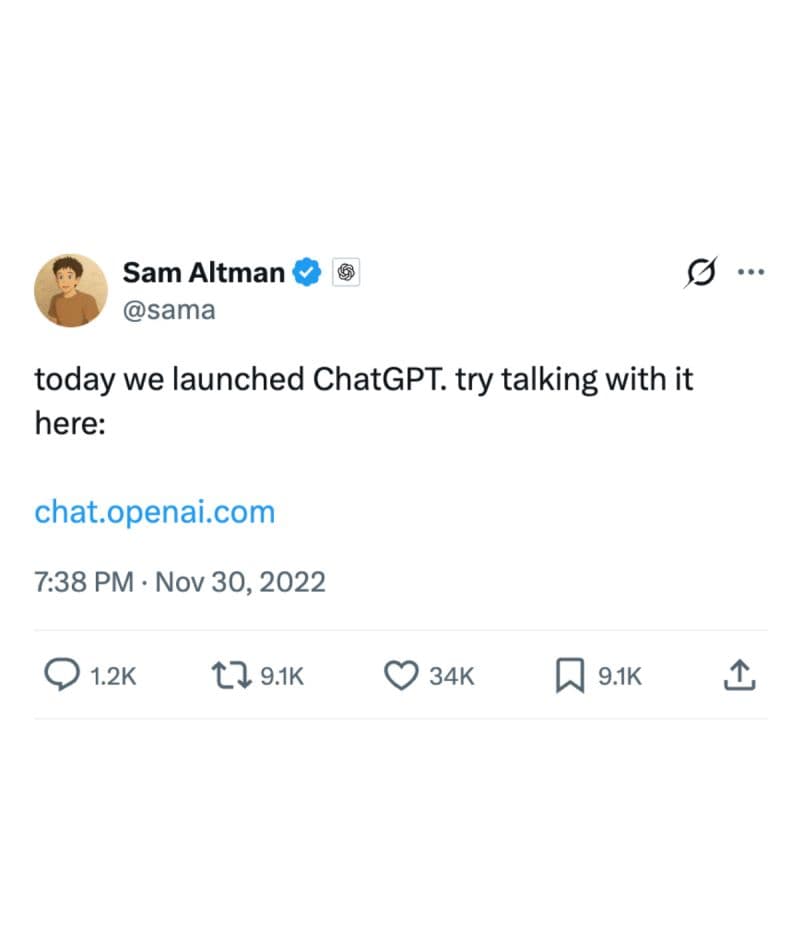
A storytelling label for this chapter, not a universally accepted technical classification.
Microsoft expands its partnership with OpenAI through a multiyear, multibillion-dollar investment. AI becomes an infrastructure and business race.
Read the record ↗GPT-4, Claude, Llama, and later Gemini turn foundation models into a competitive market. Capability, access, safety, and cost become points of contention.
Read the record ↗OpenAI’s board removes Sam Altman. He returns days later after a leadership crisis. A subsequent review describes a breakdown in trust between the board and management.
Read the record ↗Voice, images, reasoning, and tools expand what AI can do. Copyright disputes, training-data questions, safety concerns, and the cost of computing accompany the progress.
Read the record ↗
Anthropic introduced Claude in March 2023. The race was already underway; a new family of assistants gave it another serious competitor.
Introducing Claude / March 14, 2023 ↗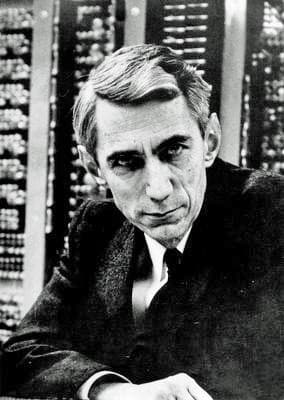
Claude is named after the pioneer of information theory. Shannon’s work explained how information could be measured and reliably transmitted; his earlier work connected Boolean logic to electrical switching circuits.
He helped lay foundations for the digital age and co-authored the proposal for the 1956 Dartmouth workshop. The name brings this story back to its beginning.
The Dartmouth proposal ↗Read the project.
Understand the request.
Edit the files.
Run the checks.
Claude Code put an agent in the terminal: reading files, making changes, and using development tools. It helped make the shift from chat assistance toward coordinated coding workflows concrete.
Anthropic’s original announcement ↗DeepSeek-R1 arrived on January 20. Its released weights and technical report put a different question at the center of the race: how much capability could be achieved more efficiently?
DeepSeek-R1 release ↗Investors reassessed the cost of AI and the demand for its chips. Nvidia shares fell almost 17% in a single session, erasing about $593 billion in market value.
This was a market reaction, not proof that advanced chips were obsolete. Nvidia remained central to the infrastructure powering the AI boom.
Reuters / January 27 market reaction ↗Models. Money. Chips. Efficiency. Trust.
Every breakthrough changed the terms of competition.
After seventy years of asking what machines could do,
we’re asking what happens to us.
ChatGPT’s research preview arrived on November 30, 2022. GPT-4 followed on March 14, 2023. The difference between their model generations was striking on a simulated bar exam.
Near the bottom of the comparison group.
Near the top of the comparison group.
Both estimates come from OpenAI’s March 2023 evaluation. They describe performance on one simulated exam, not human IQ or the ability to do an entire job.
Read the original evaluation / March 14, 2023 ↗The Future of Life Institute published an open letter calling for a pause of at least six months on training systems more powerful than GPT-4. Researchers and technology leaders backed the call for time to establish shared safety protocols.
Read the pause letter ↗Sam Altman, Demis Hassabis, and Dario Amodei joined a separate statement calling for AI extinction risk to be treated as a global priority. This statement addressed risk; it did not call for the six-month training pause.
Read the statement and signatories ↗For me, the question is about my work, my skills, and the kind of engineer I want to become.
I’m a full-stack developer. But increasingly, I think that if I’m going to build a career in an industry changing this quickly, I need to think like a software engineer.
That means taking responsibility for the whole system: understanding the problem, choosing the trade-offs, and knowing whether what we built actually works.
Writing software once meant learning how to wield a very particular chisel. Languages, frameworks, and syntax demanded years of practice before an idea could take shape.
AI is abstracting more of that work. I can spend more of my attention deciding what to build, how its parts fit together, and whether the result serves the person using it.
It was to bring an idea
from the human mind
into something that works.
The language still matters where it affects the system. But the outcome matters more than loyalty to a particular syntax.
AI can write the code. I still need to understand its behavior, question its assumptions, and explain the decisions behind it.
Architecture, security, performance, and the user’s needs still demand judgment. Generating a solution is one step; knowing it is the right solution is another.
I don’t need to obsess over every language’s punctuation to solve a problem. I need the foundations to read, test, debug, and improve whatever the system produces.
I want AI to augment my ability
to turn ideas into reality.